
 01902 737 672

Adapta J40 Restricted Profile
The Adapta J40 is a restricted-profile euro cylinder built for internal doors on master key suites. Its J40 keyway pairs on the same suite as our Adapta Prime TS007 1-star cylinders, so you can run a Kitemarked external door and cost-optimised internal doors from a single set of keys.



BSEN 1303 2005 Accredited Report No JGZ0601087-2
Grade 6 Durability (100,000 cycles) Security Grade 3.
Restricted Keyway (Extra keys only available via MKS/Original supplier).
Available Finishes for The Adapta J40
Cylinder Type
Related Products
- Adapta Prime TS007 1 Star. The external-door partner most J40 specifications are written around.
- Adapta Patent & Restricted Profile. Step up to patent-protected keyways where aftermarket blanks are a risk.
- Adapta Open Profile. Open-keyed Adapta for non-critical doors where local duplication helps.
- Squire Padlocks. Master-keyable padlocks to cover gates, sheds and plant on the same suite.
Cylinder Variant
Sizing
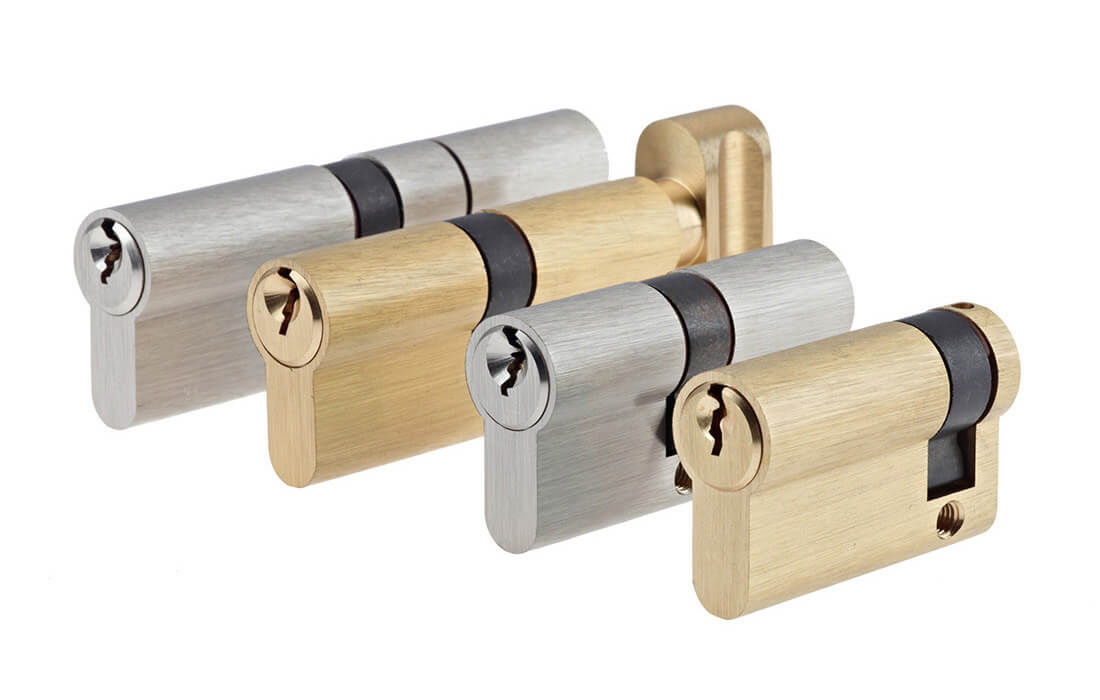
Measure from the central cam to each end face. The J40 is available in single, double and thumbturn variants. Keep projection under 3mm past the handle. For fitting guidance and how to transfer a suite onto new J40 cylinders, see our cylinder installation guide.
Options/Functions Available for The Adapta J40
Suitability
Security credentials
The J40 is BSEN 1303 accredited and designed to sit behind a TS007-rated external door, not replace one. If your specification calls for Kitemarked security on the front door, our guide to the TS007 lock standard lays out the 1-star and 3-star requirements. Internal doors do not need the same snap-resistance as externals, but if you want to understand where those attack methods apply and where they do not, read our piece on anti-snap and bump-resistant locks.